Gas and wood-burning heating systems require controlled airflow and surface temperature monitoring to maintain consistent heat output. In wood stoves, a snap disc thermostat provides automatic blower control and user notification based on measured surface temperature. We design each snap disc thermostat for wood stoves to operate as an integrated thermal control component within the appliance, not as a standalone device.
View full product line of snap disc thermostat for wood stoves.
Snap Disc Thermostat Integration in Wood Stoves
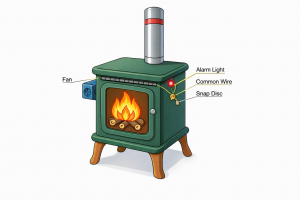
Wood stoves rely on surface temperature feedback to determine when forced air circulation adds value. A snap disc thermostat mounts to a conductive surface near the secondary air tube and monitors the thermal mass of the stove body.
First, when the surface temperature reaches approximately 83°F, the thermostat closes the blower circuit. The fan then distributes heated air into the room, improving usable heat transfer and reducing temperature stratification.
When surface temperature drops below approximately 65°F, the thermostat opens the blower circuit and transfers power to an indicator light. Consequently, the system alerts the user that combustion output has declined and refueling may be required.
Because the SPDT contact design energizes only one circuit at a time, the blower and alert signal do not operate simultaneously. As a result, wood stoves maintain controlled electrical loads and simplified wiring layouts.
Electrical Performance of a Snap Disc Thermostat for Wood Stoves
A snap disc thermostat for wood stoves must withstand repeated thermal cycling, vibration, and exposure to ash and moisture. We engineer our 3/4 inch thermostats to meet these operating demands.
Key specifications include:
• Up to 15 amps at 120 VAC
• Automatic reset operation
• Epoxy-sealed construction
• IP68 environmental rating
The automatic reset mechanism restores the circuit once the surface cools below the calibrated threshold. Additionally, the epoxy-sealed housing protects internal contacts from particulate intrusion common in solid fuel heating environments.
These electrical ratings allow direct control of blower motors in most residential and light commercial wood stove systems.
Installation Positioning Inside Wood Stove Assemblies
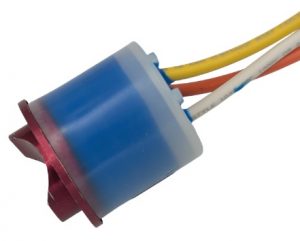
Correct mounting ensures accurate response from the snap disc thermostat used in wood stoves.
Install the thermostat on a conductive surface near the secondary air tube. Do not mount the device inside the firebox. Direct flame exposure produces unstable switching behavior and shortens service life.
Therefore, engineers should validate surface temperature profiles during stove operation and select switch points that align with actual heat output patterns. Matching calibration to the appliance thermal curve ensures proper blower engagement timing and consistent user notification.
We support multiple bracket styles, terminal options, and lead wire configurations to align with enclosure constraints and assembly processes.
System-Level Benefits of Using a Snap Disc Thermostat in Wood Stoves
Without temperature-based control, many wood stoves allow blowers to run continuously once powered. In contrast, integrating a snap disc thermostat for wood stoves introduces controlled cycling based on actual surface temperature.
First, the blower operates only when sufficient heat exists to justify airflow. Additionally, the system disables the fan when usable heat drops below effective levels.
As a result, wood stoves reduce unnecessary blower runtime, lower electrical consumption, and extend motor service life. Furthermore, combining fan control and alert signaling within a single SPDT thermostat reduces overall component count in the heating system.
By incorporating a Senasys snap disc thermostat, manufacturers improve airflow control, reduce energy waste, and simplify electrical integration within the appliance platform.